
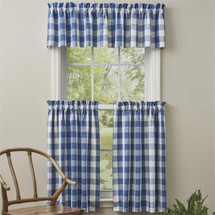
If you've been staring at your bare kitchen windows thinking something is just missing, you're probably right. No curtains at all can feel cold. Even plain curtains can feel really flat. What most country kitchens and living rooms are really missing is layers, and that's where valances and window panels together can really help.
Layering curtains sounds fancier than it is. You hang a shorter piece (a valance) at the top of your window and longer panels tucked under the valance on the sides. That's the whole idea. And when you do it right, a plain window turns into something that feels warm and pulled together, without a lot of fuss or money. Let’s talk more about how to do this.
What's the Difference Between a Valance and a Window Panel?
A valance is a short curtain that covers just the top portion of your window. It adds a decorative finish at the top and helps frame the view without blocking the light or view. Most valances run anywhere from 14 to 18 inches long.
Window panels are the longer curtains that hang straight down on either side of the window. They can go all the way to the floor or stop just below the sill, depending on the room. In kitchens, shorter panels (called tiers) are really common because you want light coming in and counter space staying clear.
Valance on top, panels on the sides; that's your layered look.

Why Layering Works So Well in Country Homes
Country style is about comfort and personality. It's not perfectly matched or over-coordinated. It's collected and cozy and a little lived-in, and the look of layered window treatments fit that perfectly.
Using panels on their own certainly has its place—it can be a simple, classic way to handle your window treatment. But adding a valance on top, and suddenly the window has personality. Add a fabric with a little pattern or texture, and you've got something that looks like it's been there for years. In country decorating, that's a good thing!
Layered curtains also let you control light and privacy with easy style. You can tie back the panels and let in the afternoon sun, or pull them closed at night. The valance stays put and keeps everything looking finished either way.
How to Layer Curtains for a Farmhouse Look
You don't need a design background to bring farmhouse style to your windows. A few simple ideas will get you most of the way there.
- Start with a valance that has some shape. A simple valance works fine if you want a more tailored, unobtrusive look, but in country homes, you'll often see gathered valances, ruffled edges, prairie points or a small scallop along the bottom. That extra detail gives the window that handmade, homey feel.
- Keep the panels simple so the valance does the visual work. If your valance has a print or a pattern, if there isn’t a panel available in the same fabric, go with solid colored panels in a coordinating shades. If your valance is solid color, you have more room to play with texture or a subtle pattern below in a coordinating shade.
- Let the panels breathe. In country and farmhouse rooms, curtain panels hang loose and flowing rather than pulled taut. A little puddle at the floor in a living room, or a clean break just above the sill in a kitchen. Both look intentional rather than accidental.
- Don't overthink the color. Country palettes lean toward naturals, warm whites, soft reds, navy, sage green and earthy browns. If your valance and panels share one color or one pattern element, they'll feel like they belong together even if they aren't a perfect match.
Kitchen Window Curtains: What Actually Works
The kitchen is where paired curtains really earn their place. You want something that looks good, but doesn't make the room feel heavy or dark, and you want something that holds up to cooking steam and everyday life.
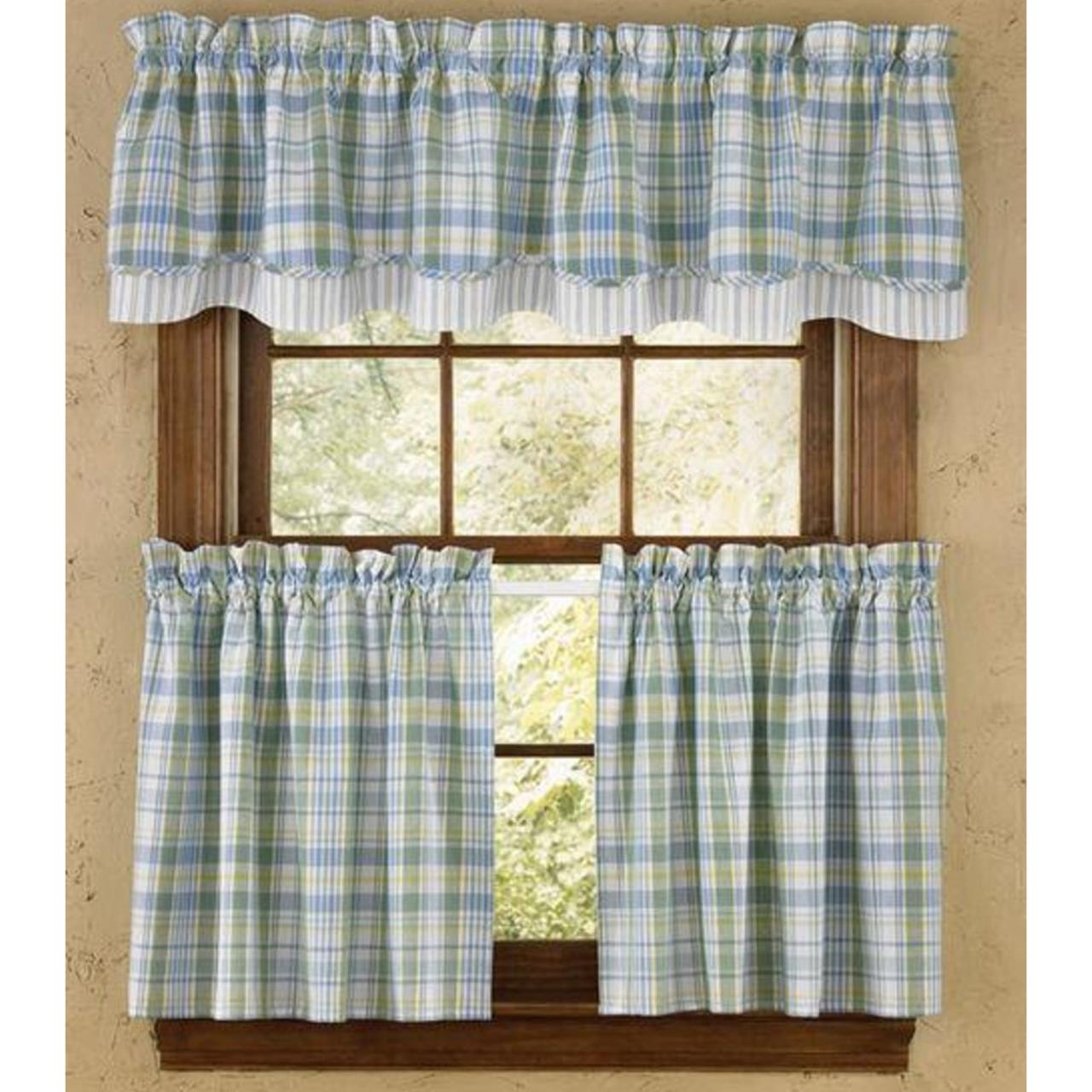
For most kitchen windows, a valance paired with cafe tiers is the classic country combination. The valance covers the top third of the window, and the tiers cover the lower half, leaving an area of open glass in the middle that lets light pour in. It's practical and it looks great over the sink.
Another option, especially if you have high ceilings and tall windows, is to pair prairie gathered curtains on top with tiers below. Prairie gathered curtains have a bit of gathering that adds interest and softness with a very country “accent” to your window.
Fabrics that hold up well in kitchens:
- Cotton: easy to wash, holds color and breathes nicely
- Cotton blends: a little more wrinkle-resistant for busy kitchens
- Linen or linen-look fabrics: casual and relaxed, great for farmhouse kitchens
- Printed cotton with small patterns: checks, plaids, roosters, sunflowers: these are classic country kitchen curtains for their playful motifs
Avoid anything too heavy or too sheer in a kitchen. Heavy fabric can feel overpowering in a smaller space, and very sheer curtains can feel flimsy for a room that does a lot of work.
Living Room Curtains: Going a Little Bigger
The living room gives you more room to play. Windows tend to be larger, ceilings tend to be higher and you have more flexibility with length and fabric weight.
For country living room curtains, a valance across the top with full-length panels on either side is the most common layered look, and it works because it's simple. You can hang the valance high, closer to the ceiling than the window frame, in order to make the room feel taller.
In a country or farmhouse living room, don't be afraid of:
- A valance with a little more detail, like a ruffled edge or prairie swags
- Panels in a heavier fabric like cotton duck or a textured woven
- Rich, warm colors like burgundy, hunter green or deep navy
- Mixing patterns thoughtfully—pair a plaid valance with solid panels, or a floral valance with a buffalo check tier. This is easiest when a manufacturer provides collections with purposely coordinated fabrics.
One thing that makes a real difference in living rooms: hang your curtain rod wide. Extend it 4 to 6 inches past the window frame on each side and let the panels stack there. Your windows will look bigger, and more light comes in when you open things up.
Are Valances Still in Style for Country Kitchens?
Yes, and honestly they never really went out of style in country homes. Valances fell out of fashion in modern and minimalist spaces, but in country, farmhouse, cottage and colonial-style homes, they've always belonged.
What's changed is how they look. Today's valances tend to have a more relaxed, casual quality rather than the stiff, very formal shape that was popular decades ago. A gathered valance with a little drape to it, or a simple prairie-style valance with a soft shape, feels current without trying too hard.
If you're decorating a country kitchen, a valance is one of the quickest and most affordable ways to add real character to the room. Pair it with matching or coordinating kitchen window valance curtains below, and you've got a finished look in about ten minutes.
A Few More Tips Before You Shop
Measure twice. Curtain sizing can be a little confusing. For a valance, you generally want the rod pocket width to be about 2 to 2.5 times the width of your window for a nice gathered look. For panels, decide whether you want them to just cover the window or extend past the frame.
Think about the rod. A simple wood or iron curtain rod fits most country and farmhouse styles nicely. Very ornate or very shiny hardware tends to feel out of place in a rustic room.
Buy in collections when you can. A lot of country curtain collections include a matching valance, tiers and panels all in the same fabric or coordinating prints. That takes the guesswork out of all the mixing and matching and makes the whole room feel pulled together.
Don't be afraid to mix patterns. Country decorating has always mixed things up. Plaids with florals, checks with stripes. As long as the colors are in the same family, it'll look like you knew exactly what you were doing.
Country Village Shoppe carries a wide selection of country curtains, including valances, panels and kitchen curtains designed to work together. If you need help finding the right combination for your windows, just reach out. We love helping customers pull a room together!
Frequently Asked Questions
What is the difference between a valance and a window panel?
A valance is a short decorative curtain that covers just the top of a window, usually 14 to 18 inches long. A window panel is a longer curtain that hangs on one or both sides. They work together – the valance frames the top, the panels hang on the sides – to give you that layered, finished look.How do you layer valances and curtains for a farmhouse look?
Start with a gathered or ruffled valance at the top of your window, then add panels or cafe tiers below it. Keep the colors in the same family and don't worry too much about a perfect match. Country and farmhouse style has always mixed patterns and textures, so a plaid valance with solid panels or a floral valance with a simple tier fits right in.Are valances still in style for country kitchens?
They are! Valances never really fell out of style in country and farmhouse decorating. Today's valances tend to have a more relaxed, gathered quality rather than a stiff or very formal shape, which fits nicely with how country kitchens look right now. They're also one of the most affordable ways to give a kitchen window some real character.What fabrics work best for country-style window treatments?
Cotton and cotton blends are most popular for country curtains because they wash easily, come in a wide range of prints and colors, and hold up well in kitchens and living rooms. Linen and linen-look fabrics work beautifully for farmhouse and cottage styles. For living rooms, heavier wovens and cotton duck add warmth and a more substantial feel.How do you style kitchen and living room windows in a country home?
In kitchens, a valance paired with cafe tiers is a classic combination that lets in light while keeping the window looking finished. In living rooms, a valance across the top with full-length panels on either side gives you a layered look that feels polished without being fussy. Hang your rod wide and high, even a few inches past the window frame.