
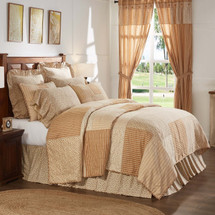
Imagine stepping into a country bedroom where sunlight streams through a window onto a bed layered with soft fabrics. A quilt that is folded at the foot, a cozy comforter draped on top and pillows arranged just enough to feel inviting without being perfect. This is the look and feel of rustic style bedding: warm, welcoming and full of character.
But when it comes to covering your bed, many people pause at the same question: should you choose a quilt or a comforter? Both can create that classic country look, but the choice affects not only warmth and comfort, but also how the room feels at a glance. In this guide, we’ll explore how quilts and comforters each fit into a country bedroom, helping you decide which option, or combination, matches your style and needs.
What Makes Bedding Feel “Country” Anyway?
The Look and Feel of Rustic Style Bedding
Country bedding has a way of feeling comfortable and lived-in, like it’s been part of the home for years. Natural fabrics like cotton and linen give a soft, breathable touch, while patterns like florals, plaids and subtle stripes bring warmth and character. Colors often feel washed or muted, adding to that cozy, slightly worn look. Rustic style bedding really focuses on creating a space that looks cared for, welcoming and full of personality.
Why Country Bedrooms Love Layers
Layering is a big part of the country bedding look. Quilts, comforters, shams and throws can all work together to create depth, texture and a sense of warmth. A quilt folded at the foot of the bed can peek out beneath a plush comforter, while coordinating pillows and soft blankets add color and pattern without feeling overdone. This layered approach not only looks appealing but also gives flexibility: quilts can be added or removed depending on the season, and comforters provide a cozy top layer in colder months. Layering is what turns a simple bed into a full country bedding set that feels rich, cozy and completely at home in a rustic bedroom.
What Is a Comforter?
A comforter might look like a thick blanket, but it’s more than that. Unlike a simple throw or blanket, a comforter is filled with down, synthetic fibers or a blend of both, giving it a soft, puffy feel. It’s usually stitched or maybe quilted to keep the filling evenly distributed, so the warmth stays consistent from top to bottom. Comforters are designed to be the main top layer on a bed, providing both insulation and a finished look.
What Is a Quilt?

A country quilt is a type of bedding made of three layers: a top fabric, a middle layer called batting and a backing fabric. These layers are stitched together, often in patterns that add texture and visual interest. Quilts can be hand-stitched or machine-made, but the key is the stitching itself. It keeps the layers together and creates the classic quilted look that makes a bed feel cozy and inviting.
Country Quilts vs. Country Comforters
Alright, so what’s the difference between the two? Some people use the terms interchangeably, but they are different. Comforters and quilts both dress a bed, but they do it in different ways. A comforter is that soft, fluffy layer you can pull up and sink into. It’s filled with down or synthetic fibers, like we talked about. Many country comforters come as part of coordinated bedding sets, making it easy to get a polished look without much fuss.
Quilts, on the other hand, are lighter and built from three stitched layers. Quilts are great for layering, letting you mix textures and patterns for a more textured, cozy look. They’re breathable, versatile and perfect for adding that handcrafted, lived-in feel that makes a country bedroom feel so welcoming.
The choice usually comes down to warmth and style. Comforters give extra warmth for chilly nights, while quilts are lighter and perfect for layering or warmer months. Many country bedrooms use both: a quilt for spring and summer, and a comforter in fall and winter. This way, the bed stays comfortable year-round without losing that rustic, country feel.
How to Style a Country Bed Using Quilts or Comforters
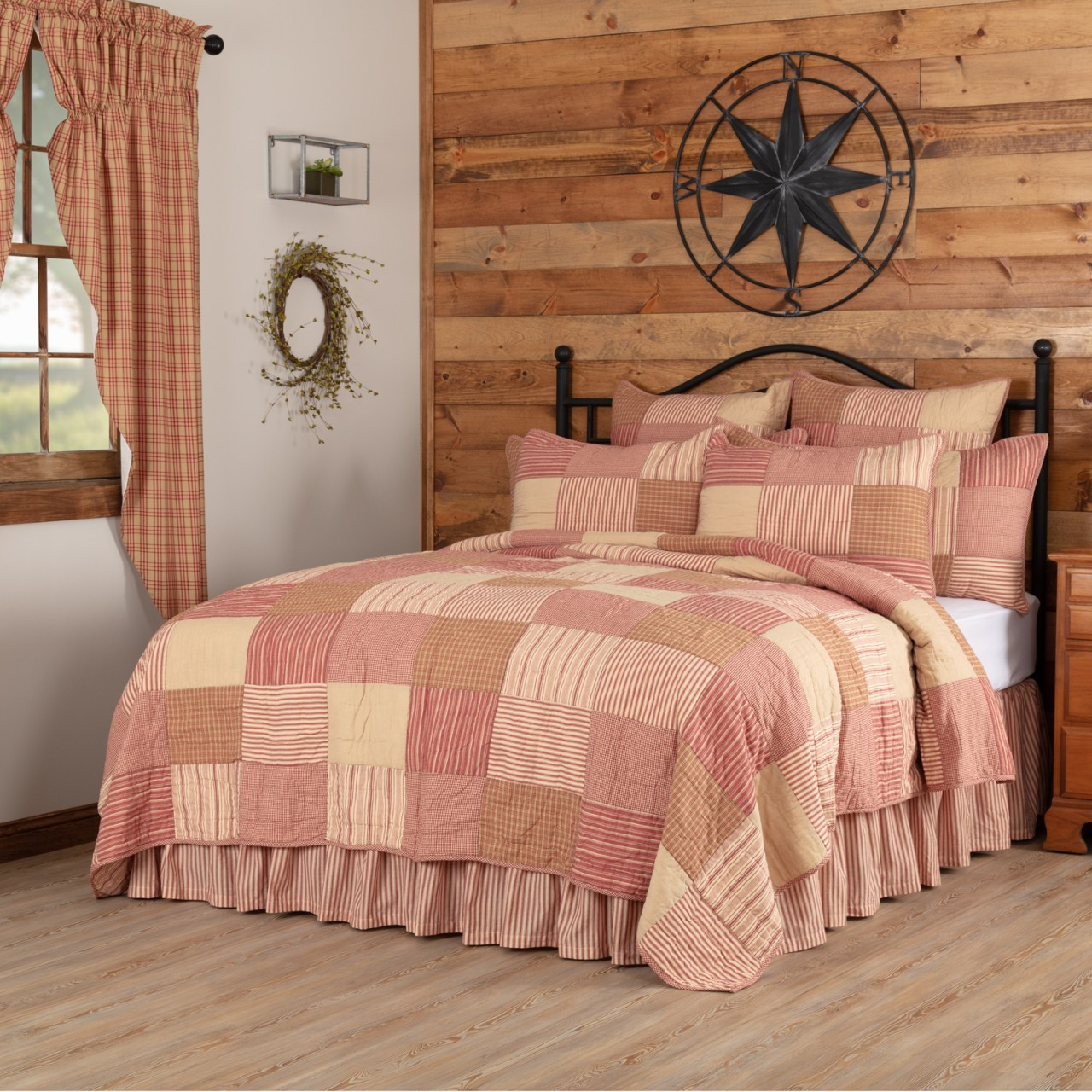
Creating a country-style bed really starts with layering the right pieces. We’d suggest starting with soft, natural sheets, then add matching shams to frame the pillows. A quilt or comforter goes on top, depending on the season and the look you want. Coordinated country bedding sets make this simple, with patterns and colors designed to work together without much effort. Adding a throw or accent pillow can finish the look, bringing texture and depth to the bed without feeling fussy.
Mixing Patterns Without Overthinking It
Layering some patterns is part of what gives a country bedroom a lot of its charm. Combining florals, stripes, plaids or solids can feel tricky, but the key is balance. Start with one main pattern, like a floral quilt or plaid comforter, and then add smaller patterns in pillows or throws that share similar colors. Mixing textures, like cotton, linen and a chunky knit, adds some interest without making the bed look overdone. This approach keeps the space cozy, inviting and authentically rustic.
Seasonal Swaps That Keep the Look Fresh
Switching bedding with the seasons keeps a country bedroom feeling fresh. Quilts work well in spring and summer, offering a lighter layer that’s easy to mix with sheets and throws. Comforters are perfect for fall and winter, giving some warmth and a plush, cozy top layer. Using the same core color palette makes these swaps easy and keeps the bed looking cohesive year-round. This simple routine lets a bedroom feel stylish and comfortable no matter the season.
Final Thoughts: Creating a Country Bedroom That Feels Like Home
There’s no single right answer when it comes to choosing bedding for a country bedroom. It really depends on your style and taste. For a simple way to bring country style home, though, Country Village Shoppe offers a range of country quilts, comforters and coordinated bedding sets.
Frequently Asked Questions About Quilts and Comforters
Is a quilt better than a comforter?
It depends on what you want from your bedding. Quilts are lighter, breathable and great for layering, giving a classic country look. Comforters are warmer and plush, perfect for cold nights or a simpler, cozy style. Many country bedrooms use both seasonally.
Are quilts good to sleep with?
Yes. Quilts are soft, breathable and comfortable for year-round use. Their lightweight feel and design make them ideal for layering or using alone in warmer months, while still providing enough warmth on cooler nights.
Why are quilts more expensive than comforters?
Quilts often cost more because of the craftsmanship, materials and stitched construction. High-quality fabrics and detailed patterns make them durable and long-lasting, sometimes even becoming heirloom pieces.
What’s the difference between a comforter and a quilt?
A quilt has three stitched layers; top, batting and backing, often with decorative patterns. It’s lighter and good for layering. A comforter is a single, fluffy piece filled with down or synthetic fibers, offering more warmth and a plush, uniform look.
Can you use a quilt without a comforter?
Yes, you can use a quilt without a comforter. While quilts are thinner than comforters or duvets, they are constructed with a denser fill that provides a reassuringly heavy feel and adequate warmth for many sleepers.
Is a quilt just a blanket?
While a quilt is technically a type of blanket, it is defined by a specific three-layer construction that sets it apart from standard single-layer coverings. In the broad category of bedding, "blanket" is a general term for any warm cover thicker than a sheet, whereas a quilt is a specialized textile characterized by its layered design and decorative stitching.
What is the average lifespan of a quilt?
The average lifespan of a quilt is approximately five years. While quilts are generally the most durable component of a bedding set, often outlasting sheets and pillows, they still require regular replacement to ensure optimal comfort, hygiene, and insulation.
Are quilts warm enough for winter?
Yes, quilts are warm enough for winter, especially when used as part of a strategic layering system. While a quilt alone may be sufficient for moderate climates, its true strength in cold weather lies in its versatility and construction.
Should I use a quilt or a comforter?
The choice between a quilt and a comforter depends primarily on your local climate and your personal warmth preferences. While both provide comfort, they differ significantly in insulation and loft:
- Choose a Comforter for Maximum Warmth: Comforters are generally warmer than quilts. Because they are constructed with a thick layer of fill (such as down or synthetic alternatives), they offer superior insulation. Depending on the amount and type of fill, comforters can range from lightweight options for mild weather to heavy-duty bedding designed to keep sleepers cozy on the coldest nights.
- Choose a Quilt for Versatility or Warm Climates: Quilts are thinner, flatter, and typically have three layers stitched together. They provide less insulation than a comforter, making them ideal for "hot sleepers," use during summer months, or as a decorative layering piece over other blankets.